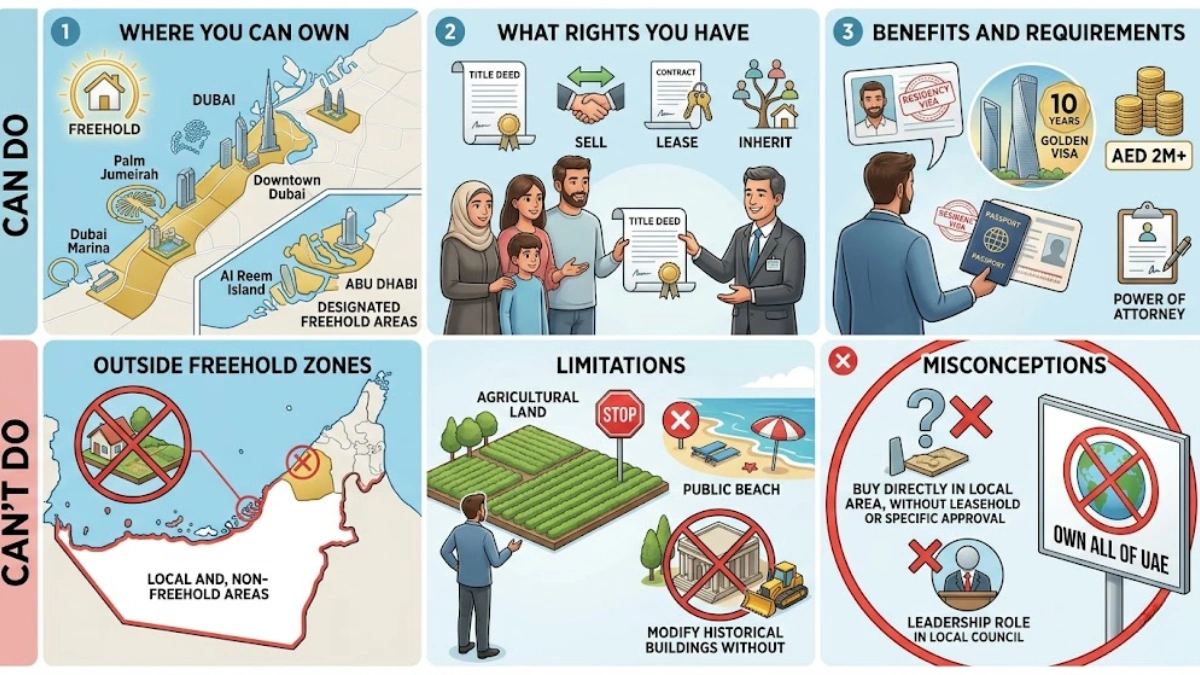
The United Arab Emirates has one of the most open and investor-friendly real estate markets in the world. Cities like Dubai attract thousands of expatriates and foreign investors every year due to strong rental yields, tax advantages, and clear legal frameworks.
However, property ownership rules for expats are not the same across all emirates or property types. Understanding what you can and cannot do is essential before investing, renting, or buying real estate in the UAE.
In general, expats can legally own property but only under specific conditions defined by UAE property law and regulated by the Dubai Land Department.
What Property Ownership Options Do Expats Have in UAE?
Expats can choose from three main types of property ownership structures in the UAE:
1. Freehold Ownership
Foreigners can fully own property (land + unit) in designated areas.
2. Leasehold Ownership
Long-term lease rights (usually up to 99 years), without owning the land.
3. Usufruct Rights (in some emirates)
Right to use and benefit from a property for a fixed period without ownership.
Where Expats Can Buy Property in UAE
Expats cannot buy property everywhere. Ownership is restricted to government-designated zones.
Key Freehold Areas in Dubai
Common freehold investment zones include:
- Downtown Dubai
- Dubai Marina
- Palm Jumeirah
- Business Bay
- Jumeirah Village Circle
These areas allow 100% foreign ownership under UAE regulations.
What Expats CAN Do in UAE Property Market
Expats enjoy several strong ownership rights in permitted zones.
Full Ownership Rights in Freehold Areas
In designated zones, expats can:
- Buy property in their name
- Own 100% of the property
- Sell the property anytime
- Rent it out for income
- Transfer ownership or gift it
- Pass property to heirs
Mortgage Financing
Expats can apply for home loans from UAE banks, usually with:
- 20%–25% down payment (typical for expats)
- Income verification requirements
- Loan-to-value limits based on property type
Residency Visa Eligibility
Property investors may qualify for UAE residency visas depending on investment value and government rules.
What Expats CANNOT Do in UAE Property Market
Despite the flexibility, there are clear restrictions.
Cannot Buy Outside Designated Zones
Expats cannot own freehold property in non-designated areas.
Cannot Own Land in Restricted Emirates
Some emirates still limit ownership rights for foreigners.
Cannot Ignore Registration Rules
All transactions must be registered with the Dubai Land Department or relevant authority.
Cannot Bypass Developer Approval
Off-plan or resale transactions require proper approvals and documentation.
Ownership Rules Comparison Table (Freehold vs Leasehold vs Usufruct)
| Feature | Freehold | Leasehold | Usufruct |
|---|---|---|---|
| Ownership Type | Full ownership | Temporary rights | Usage rights only |
| Duration | Permanent | Up to 99 years | Fixed term |
| Land Ownership | Yes | No | No |
| Can Sell Property | Yes | Yes (with conditions) | Limited |
| Can Inherit | Yes | Sometimes | No |
| Available to Expats | Yes (designated zones) | Yes (selected areas) | Limited |
Key Legal Requirements for Expats Buying Property
Before purchasing property in UAE, expats must meet basic legal requirements:
- Valid passport (mandatory)
- Signed sales and purchase agreement
- Property registration with Dubai Land Department
- Payment of transfer fees and charges
- Developer No Objection Certificate (for resale properties)
All ownership rights are only valid after official registration.
Cost and Fees Expats Should Expect
Buying property in UAE involves additional costs beyond the purchase price.
Common Fees Table
| Cost Type | Typical Rate |
|---|---|
| Dubai Land Department Transfer Fee | 4% of property value |
| Registration Fee | Fixed administrative fee |
| Real Estate Commission | ~2% |
| Mortgage Registration (if applicable) | ~0.25% |
| Service Charges | Annual (varies by project) |
These costs apply mainly in Dubai and may vary slightly across emirates.
Rules for Off-Plan Property for Expats
Off-plan investments are popular among foreign buyers in Dubai.
Key Protections for Expats
- Escrow accounts protect buyer payments
- Oqood registration confirms interim ownership
- Payments linked to construction milestones
- Regulated by Dubai Land Department
This system reduces fraud risk and increases investor confidence.
Common Mistakes Expats Should Avoid
- Buying outside freehold zones
- Not verifying developer credentials
- Ignoring service charges
- Skipping legal review of contracts
- Not checking DLD registration
Why UAE Is Popular for Foreign Investors
The UAE real estate market remains attractive due to:
- No property tax
- High rental yields (6%–9%)
- Strong economic growth
- Tourism-driven demand
- Stable legal framework
This makes Dubai one of the most preferred global investment hubs.
FAQs About Property Ownership for Expats in UAE
Can expats own property in Dubai?
Yes, expats can own property in designated freehold areas.
Do expats get full ownership rights?
Yes, in freehold zones expats get 100% ownership rights.
Can expats buy land in UAE?
Only in specific freehold areas; otherwise, land ownership is restricted.
Can property ownership lead to residency?
Yes, qualifying investments may support UAE residency visa applications.
Is leasehold property safe for expats?
Yes, but ownership is time-limited compared to freehold.
Final Thoughts
Property ownership rules for expats in the UAE are clear but highly structured. Investors can fully own property in designated freehold zones in cities like Dubai, but must follow strict legal frameworks regulated by the Dubai Land Department.
Understanding what you can and cannot do is essential before investing. Freehold ownership offers the most flexibility and long-term value, while leasehold and usufruct options may suit specific budget or usage needs.
With proper due diligence, UAE real estate remains one of the most secure and attractive investment opportunities for global expats.