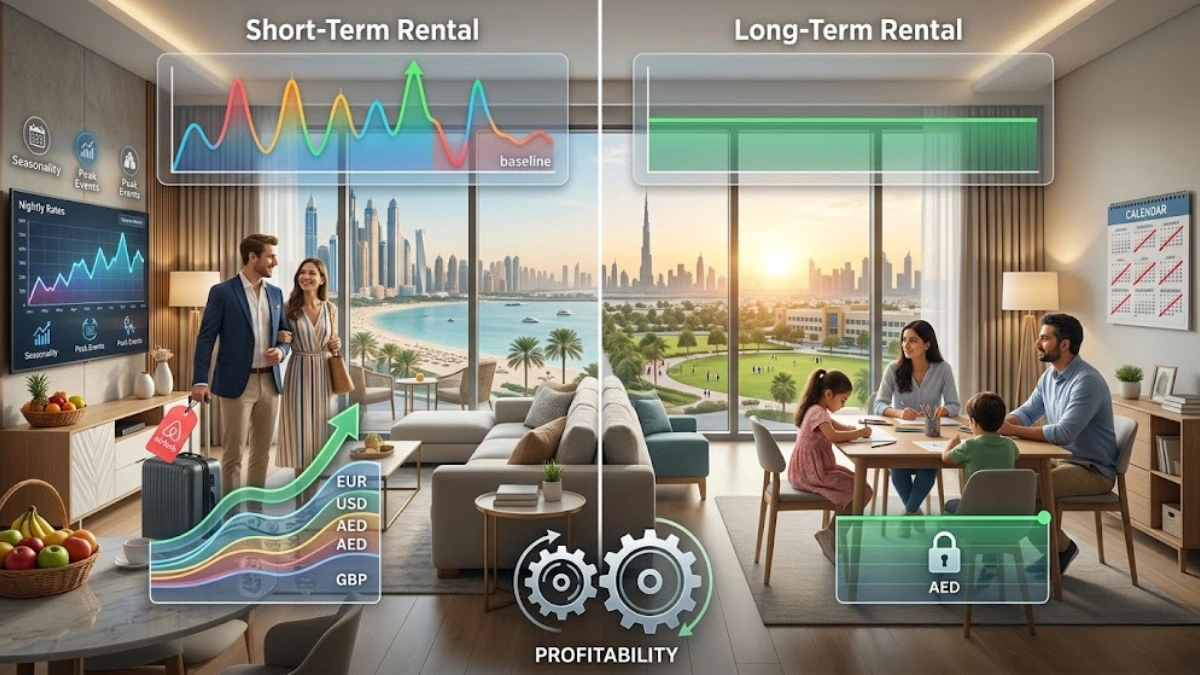
Dubai has become one of the world’s most profitable real estate investment markets thanks to strong tourism, a growing expatriate population, and tax-friendly property laws. Investors buying apartments or villas in Dubai often face one important question: should they choose short-term rentals like Airbnb or traditional long-term leasing?
Both strategies can generate strong income, but profitability depends on several factors including location, occupancy rates, management costs, and market demand. This guide compares short-term and long-term rentals in Dubai to help investors decide which strategy may earn more in 2026.
Short-Term Rental vs Long-Term Rental Comparison Table
| Feature | Short-Term Rental (Airbnb) | Long-Term Rental |
|---|---|---|
| Rental Duration | Daily or weekly | 1 year or longer |
| Income Potential | Higher | Moderate |
| Occupancy Stability | Variable | Stable |
| Management Effort | High | Low |
| Furnishing Requirement | Fully furnished | Optional |
| Utility Costs | Paid by owner | Usually paid by tenant |
| Maintenance Frequency | Higher | Lower |
| Flexibility | High | Limited |
| Vacancy Risk | Higher | Lower |
| Best For | Active investors | Passive investors |
Understanding Short-Term Rentals in Dubai
Short-term rentals involve leasing a property for days, weeks, or a few months through platforms such as:
- Airbnb
- Booking.com
- Vrbo
These properties are typically fully furnished and target:
- Tourists
- Business travelers
- Digital nomads
- Short-stay residents
Dubai’s tourism-driven economy has created massive demand for holiday homes and serviced apartments.
Understanding Long-Term Rentals in Dubai
Long-term rentals involve leasing a property to tenants for six months to multiple years under formal tenancy contracts.
Typical long-term tenants include:
- Working professionals
- Families
- Expat residents
- Students
These rentals provide stable income and lower management involvement.
How Dubai Regulates Short-Term Rentals
Dubai strictly regulates holiday homes.
Property owners offering short-term rentals must obtain permits from the:
- Dubai Department of Economy and Tourism
Requirements may include:
- Holiday home license
- Safety compliance
- Insurance
- Furnished property standards
Failure to comply may result in fines or legal penalties.
Average Income Comparison
The income difference between both strategies can vary significantly depending on the area and occupancy level.
| Property Type | Long-Term Annual Income | Short-Term Annual Income Potential |
|---|---|---|
| Studio Apartment | AED 55,000–75,000 | AED 80,000–120,000 |
| 1-Bedroom Apartment | AED 75,000–110,000 | AED 120,000–180,000 |
| Luxury Apartment | AED 150,000–300,000 | AED 250,000–500,000+ |
Prime tourist areas often produce stronger short-term rental earnings.
Why Short-Term Rentals Can Earn More
Higher Nightly Rates
A property rented nightly often produces higher monthly revenue than a yearly lease.
For example:
| Rental Type | Example Monthly Revenue |
|---|---|
| Long-Term Lease | AED 8,000 |
| Short-Term Rental | AED 12,000–18,000 |
Income varies depending on occupancy and seasonality.
Tourism Growth in Dubai
Dubai continues attracting millions of visitors annually through:
- Luxury tourism
- Business events
- International exhibitions
- Shopping festivals
- Sporting events
Tourism growth supports strong short-term rental demand.
Flexibility in Pricing
Short-term hosts can increase rates during:
- Holidays
- Conferences
- Peak tourism seasons
- Major events
Long-term leases usually lock pricing for one year.
Costs Associated With Short-Term Rentals
Higher revenue also comes with higher operating expenses.
| Expense Type | Short-Term Rental | Long-Term Rental |
|---|---|---|
| Furnishing | High | Moderate |
| Utility Bills | Owner Pays | Tenant Pays |
| Cleaning | Frequent | Minimal |
| Platform Fees | Yes | No |
| Management Fees | Higher | Lower |
| Marketing Costs | Higher | Minimal |
Furnishing Costs
Short-term properties must be fully furnished and professionally designed.
Utility Bills
Owners usually pay for:
- Electricity
- Water
- Internet
- Streaming services
Cleaning and Maintenance
Frequent guest turnover increases cleaning and repair expenses.
Management Costs
Many investors hire holiday-home management companies to handle:
- Guest communication
- Check-ins
- Cleaning coordination
- Pricing optimization
Management fees can reduce net profits significantly.
Advantages of Long-Term Rentals
Despite lower gross income, long-term leasing offers important benefits.
Stable Cash Flow
Monthly rental income is predictable and consistent.
Lower Vacancy Risk
Tenants usually sign contracts lasting 12 months or longer.
Reduced Management Stress
Long-term rentals require less day-to-day involvement.
Lower Operational Costs
Owners avoid:
- Frequent cleaning
- Utility payments
- Constant guest support
Simpler Legal Structure
Dubai’s tenancy system for long-term leasing is straightforward and regulated.
Best Areas for Short-Term Rentals
Tourism-focused areas generally perform best for Airbnb-style investments.
Luxury Tourist Zones
- Downtown Dubai
- Palm Jumeirah
- Dubai Marina
These areas attract vacation travelers willing to pay premium nightly rates.
Business Travel Areas
- Business Bay
- Dubai International Financial Centre
Corporate travelers often prefer furnished short-stay apartments.
Best Areas for Long-Term Rentals
Long-term tenants usually prioritize affordability and convenience.
Family-Friendly Communities
- Jumeirah Village Circle
- Dubai Silicon Oasis
- Al Furjan
These areas often produce stable occupancy rates.
Occupancy Rates Matter
Short-term rental profitability depends heavily on occupancy.
A property charging high nightly rates may still underperform if bookings are inconsistent.
Important factors affecting occupancy include:
- Location
- Property quality
- Guest reviews
- Seasonality
- Competition
- Pricing strategy
Long-term rentals generally experience fewer vacancy periods.
Seasonality and Market Cycles
Dubai’s short-term rental market experiences seasonal fluctuations.
Peak Seasons
Demand rises during:
- Winter months
- New Year holidays
- Shopping festivals
- International events
Slower Seasons
Occupancy may decline during:
- Summer months
- Economic downturns
- Oversupply periods
Long-term leasing provides more protection against seasonal volatility.
Tax Advantages in Dubai
Dubai remains highly attractive because there is:
- No annual property tax
- No rental income tax for individuals
- No capital gains tax for individuals
These tax benefits support both short-term and long-term investment strategies.
Which Strategy Is Better for Foreign Investors?
The best option depends on investor goals.
| Investor Goal | Better Strategy |
|---|---|
| Maximum Income Potential | Short-Term Rental |
| Stable Passive Income | Long-Term Rental |
| Personal Holiday Use | Short-Term Rental |
| Lower Management Stress | Long-Term Rental |
| Flexible Pricing | Short-Term Rental |
| Predictable Occupancy | Long-Term Rental |
Short-Term Rentals May Be Better If You Want:
- Higher income potential
- Flexible property use
- Tourism-driven returns
- Personal vacation usage
Long-Term Rentals May Be Better If You Want:
- Stable passive income
- Lower management involvement
- Predictable cash flow
- Lower operational costs
FAQs
Are Airbnb rentals legal in Dubai?
Yes, short-term rentals are legal if owners obtain the required holiday-home permits.
Which areas are best for Airbnb in Dubai?
Popular areas include Downtown Dubai, Dubai Marina, and Palm Jumeirah.
Do short-term rentals earn more than long-term rentals?
In many tourist-heavy locations, short-term rentals can generate higher gross income, but costs are also higher.
Is long-term rental income more stable?
Yes, long-term leases usually provide more predictable monthly cash flow.
Do Dubai landlords pay rental income tax?
No, Dubai does not impose rental income tax on individuals.
Should beginners choose short-term or long-term rentals?
Beginners often prefer long-term rentals because they involve lower management complexity and more stable income.
Final Verdict: Which Earns More?
In many prime Dubai locations, short-term rentals can generate significantly higher gross income than traditional long-term leases.
However, short-term rentals also involve:
- Higher costs
- Greater management effort
- Occupancy risk
- Seasonal fluctuations
Long-term rentals provide more predictable income and lower operational stress.
For experienced investors willing to actively manage properties, Airbnb-style rentals may deliver higher overall returns. For passive investors seeking stability, long-term leasing often remains the safer and simpler option.