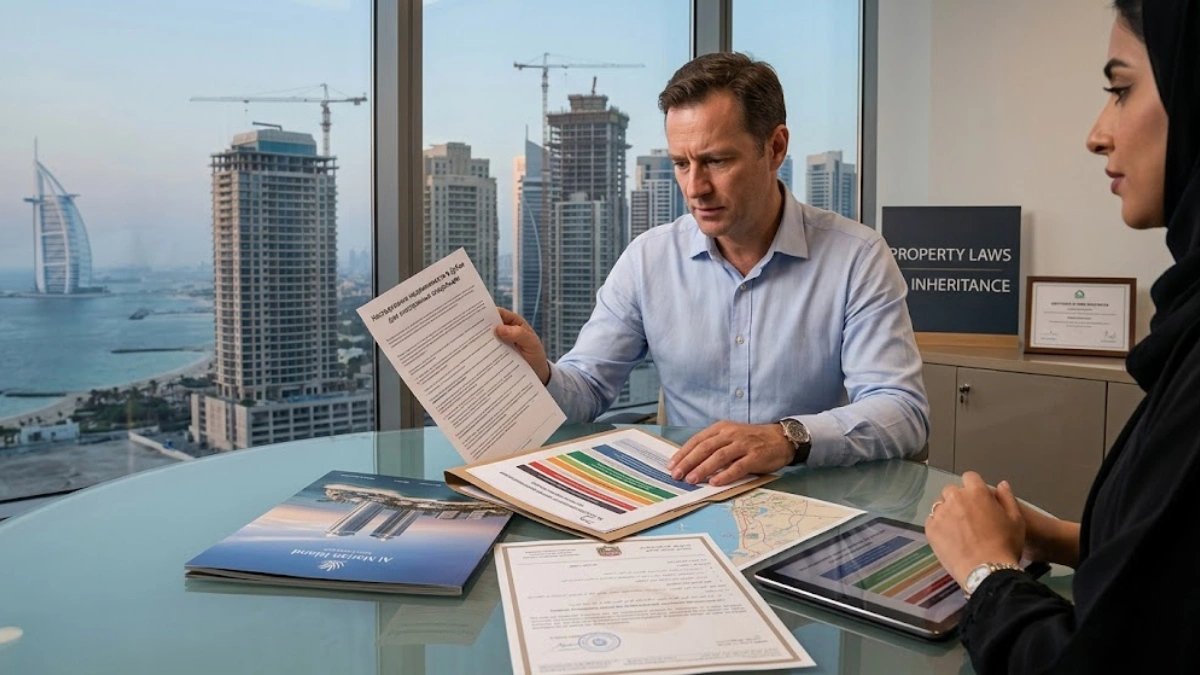
Dubai is one of the most attractive global real estate markets for foreign investors, but inheritance rules in the UAE are very different from those in many Western and Asian countries. Understanding how property is transferred after death is essential for foreign owners to protect their assets and ensure their wishes are followed.
In Dubai, inheritance laws depend on factors such as religion, nationality, and whether a valid will exists. For foreign property owners, having a proper legal structure in place is extremely important.
This guide explains how inheritance works for foreign property owners in Dubai, key legal rules, and how to protect your real estate assets in 2026.
How Inheritance Works in Dubai
Inheritance in Dubai is governed by UAE federal laws, primarily influenced by Sharia law principles. However, reforms in recent years have introduced more flexibility for non-Muslim expatriates.
For property owners, inheritance rules depend on:
- Whether the owner is Muslim or non-Muslim
- Whether a registered will exists in the UAE
- The type of assets involved (movable vs immovable property)
- Where the assets are located
Without a valid will, UAE law may automatically apply Sharia-based distribution rules.
Inheritance Rules for Non-Muslim Foreigners
Non-Muslim expatriates now have more control over how their assets are distributed, but only if they take proper legal steps.
With a Registered Will
If a valid will is registered in the UAE:
- Assets are distributed according to the will
- The deceased’s wishes are respected
- Foreign laws may also be considered in some cases
- Probate is handled through UAE courts or relevant authorities
Without a Will
If no will exists:
- UAE courts may apply Sharia inheritance principles
- Assets may be distributed among legal heirs automatically
- The process may become slower and more complex
- Bank accounts and properties may be frozen until resolution
Do Foreigners Fully Own Property in Dubai?
Yes. Foreign investors can fully own property in designated freehold areas such as:
- Downtown Dubai
- Dubai Marina
- Palm Jumeirah
- Business Bay
However, ownership does not override inheritance laws. The transfer of property after death still follows UAE legal procedures.
Key UAE Laws Governing Inheritance
Inheritance in Dubai is governed by:
- UAE Federal Law No. 28 of 2005 (Personal Status Law)
- UAE Civil Personal Status Law reforms for non-Muslims
- Dubai Courts and DIFC Wills framework (for registered wills)
These laws determine how assets are distributed when a property owner passes away.
Importance of a UAE-Registered Will
For foreign property owners, having a will is the most important legal safeguard.
What a UAE Will Does
A registered will ensures:
- Your property goes to chosen beneficiaries
- Your assets are not distributed under default Sharia rules
- Faster probate process
- Reduced legal disputes among heirs
Where to Register a Will
Common options include:
- DIFC Wills Service Centre (for non-Muslims)
- Dubai Courts Will registration system
A DIFC Will is widely used by foreign investors due to its international legal structure.
| Topic | Key Rules in Dubai Inheritance Law for Foreign Property Owners |
|---|---|
| Legal System | UAE federal law influenced by Sharia principles, with special provisions for non-Muslims |
| Freehold Ownership | Foreigners can fully own property in designated freehold areas, but inheritance still follows UAE law |
| With a Registered Will | Property is distributed according to the will, subject to UAE legal validation |
| Without a Will | Courts may apply Sharia inheritance rules and determine legal heirs |
| Asset Freeze | Bank accounts and property are typically frozen until inheritance is legally resolved |
| Will Registration Options | DIFC Wills Service Centre or Dubai Courts |
| Muslim Owners | Sharia inheritance rules generally apply with fixed shares for heirs |
| Non-Muslim Owners | Can use a registered will to apply home-country distribution preferences |
| Inheritance Tax | No inheritance tax on property in Dubai |
| Transfer Process | Requires court approval, death certificate, and title deed update |
| Joint Ownership | Surviving owner retains share; deceased share is subject to inheritance rules |
| Risks | No will, unclear ownership structure, cross-border legal conflicts, delays in probate |
| Protection Strategy | Register a UAE will, structure ownership properly, seek legal guidance |
| Final Outcome | Property is transferred to heirs after legal verification and documentation completion |
What Happens to Property Without a Will?
If a foreign property owner dies without a will:
1. Legal Freeze on Assets
- Bank accounts and property may be frozen
- No transactions allowed until court approval
2. Court-Based Distribution
- UAE courts determine heirs
- Sharia principles may be applied
3. Longer Processing Time
- Legal inheritance cases can take months
- Disputes may delay asset transfer
This is one of the biggest risks for foreign property investors in Dubai.
Inheritance Process for Dubai Property
When a property owner passes away, the process typically includes:
Step 1: Death Registration
- Official death certificate is issued
- Documents are submitted to UAE authorities
Step 2: Asset Freezing
- Bank accounts and property transactions are temporarily frozen
Step 3: Legal Case or Will Execution
- If will exists → executed through court or DIFC
- If no will → court determines inheritance distribution
Step 4: Property Transfer
- Title deed is updated
- Ownership is transferred to legal heirs
Joint Ownership and Inheritance
If property is jointly owned:
Spousal Ownership
- The surviving owner retains their share
- The deceased share is distributed under inheritance rules
Business Partners
- Ownership share is treated as part of estate
- Transfer depends on legal documentation
Proper structuring can help avoid disputes.
Inheritance Rights for Muslim Foreign Owners
For Muslim property owners:
- Sharia inheritance rules generally apply
- Fixed shares are assigned to legal heirs
- Distribution follows Islamic law principles
These rules are more structured but less flexible than wills.
Common Risks for Foreign Property Owners
1. No Will in Place
This is the most serious risk, leading to court-controlled distribution.
2. Unclear Ownership Structure
Improper documentation can delay inheritance transfer.
3. Cross-Border Legal Conflicts
If heirs live in different countries, legal complexity increases.
4. Frozen Assets
Without proper planning, assets may remain inaccessible for long periods.
How to Protect Your Dubai Property
1. Register a UAE Will
A legally registered will is the strongest protection tool.
2. Use Clear Ownership Structures
Ensure property is correctly registered in your name or shared ownership format.
3. Plan for Cross-Border Inheritance
Coordinate UAE law with your home country’s inheritance system.
4. Seek Legal Advice
For high-value portfolios, legal consultation is essential.
Tax Implications of Inheritance in Dubai
Dubai has a major advantage:
- No inheritance tax on property
- No estate tax for real estate transfers
However:
- Legal and court fees may apply
- Registration fees are required for ownership transfer
This makes Dubai attractive for global wealth planning.
Why Inheritance Planning Matters for Investors
Foreign investors often focus on rental income and capital appreciation but ignore succession planning.
Proper inheritance planning ensures:
- Wealth protection
- Smooth asset transfer
- Reduced legal disputes
- Long-term family security
In Dubai’s fast-growing real estate market, this is a critical part of investment strategy.
FAQs
Do foreigners need a will for property in Dubai?
Yes, a registered will is strongly recommended to ensure assets are distributed according to your wishes.
What happens if a foreigner dies without a will in Dubai?
UAE courts may apply Sharia inheritance laws and distribute assets among legal heirs.
Is there inheritance tax in Dubai?
No, Dubai does not impose inheritance tax on property.
Can I choose who inherits my property in Dubai?
Yes, but only if you have a legally registered will.
Where can I register a will in Dubai?
You can register through DIFC Wills Service Centre or Dubai Courts.
Are bank accounts also frozen after death?
Yes, bank accounts and property are usually frozen until legal inheritance procedures are completed.
Final Thoughts
Dubai offers strong property ownership rights for foreign investors, but inheritance laws require careful planning. Without a valid will, assets may be subject to Sharia-based distribution and court procedures, which can delay or complicate inheritance.
For foreign property owners, the safest approach is to:
- Register a UAE-recognized will
- Understand ownership structures
- Plan inheritance across jurisdictions
- Seek legal guidance for high-value assets
With proper planning, Dubai real estate can remain a secure and transferable long-term investment for future generations.