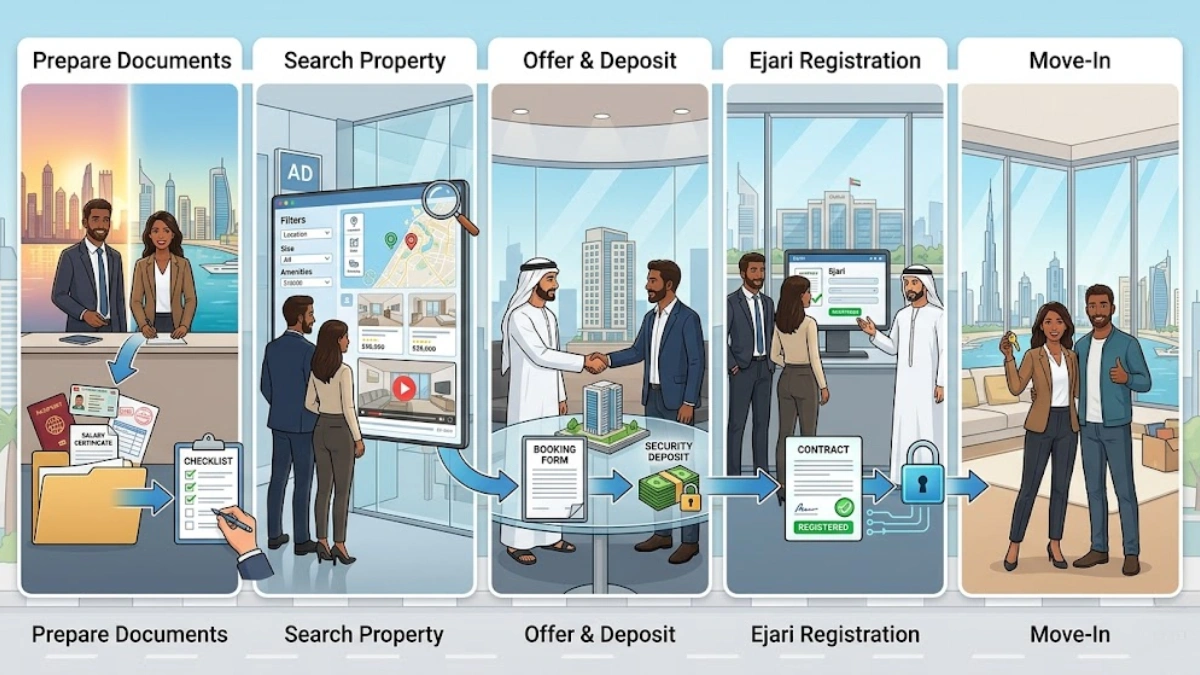
Moving to Dubai as a new expat can be exciting, but finding your first apartment can feel overwhelming if you don’t understand the local rental process. Dubai has a well-regulated rental market, but it works differently from many Western countries.
This step-by-step guide explains exactly how to rent an apartment in Dubai—from budgeting and searching to signing contracts and moving in.
Step 1: Understand Your Budget
Before you start searching, you need a realistic budget based on Dubai rental prices.
Typical annual rent ranges (2026)
| Property Type | Average Rent (AED/year) |
|---|---|
| Studio | 25,000 – 55,000 |
| 1 Bedroom | 45,000 – 120,000 |
| 2 Bedroom | 70,000 – 180,000 |
Also factor in:
- Security deposit (5%–10%)
- Agency commission (usually 5%)
- Utilities (DEWA)
- Internet and cooling charges
Step 2: Choose the Right Area
Location affects your rent, commute, and lifestyle.
Popular expat-friendly areas
- Jumeirah Village Circle – affordable and modern
- Dubai Marina – waterfront lifestyle
- Business Bay – central business hub
- International City – budget-friendly option
Choose based on:
- Work location
- Budget
- Transport access
- Lifestyle preference
Step 3: Search for Apartments
You can find listings through:
- Real estate agents
- Property websites
- Developer portals
- Social media groups
What to look for
- Chiller-free or not (AC included or separate)
- Furnished vs unfurnished
- Parking availability
- Building amenities
- Distance to metro
Step 4: View Properties (Very Important)
Never rent without visiting the apartment first.
During the viewing check:
- Water pressure and plumbing
- Air conditioning condition
- Natural light
- Noise levels
- Maintenance quality of building
- Security and cleanliness
Take photos and compare at least 3–5 options.
Step 5: Make an Offer and Negotiate
Once you find a suitable apartment:
- Negotiate rent (especially for annual contracts)
- Ask for flexible payment terms (1–4 cheques)
- Request minor repairs if needed
Landlords in Dubai often expect negotiation, especially in competitive areas.
Step 6: Understand Rental Payments (Cheques System)
Unlike monthly rent systems in many countries, Dubai commonly uses post-dated cheques.
Typical payment structure
| Payment Type | Meaning |
|---|---|
| 1 cheque | Full yearly rent upfront (best discount) |
| 2–4 cheques | Split payments across the year |
| Monthly (rare) | Higher rent, usually corporate rentals |
Step 7: Sign the Tenancy Contract (Ejari Registration)
Your rental contract must be registered through the official system called Ejari.
Why Ejari is important
- Legally protects tenant rights
- Required for utilities (DEWA connection)
- Needed for visa processes
Documents usually required:
- Passport copy
- Visa copy
- Emirates ID (if available)
- Signed tenancy contract
Step 8: Pay Security Deposit and Fees
Before moving in, you typically pay:
- Security deposit (refundable)
- Agency commission
- First rent cheque(s)
Always request receipts.
Step 9: Set Up Utilities and Services
After Ejari registration, set up:
DEWA (Electricity & Water)
- Security deposit required
- Online setup available
Internet
Providers include:
- Etisalat
- du
Cooling (if applicable)
Some buildings use district cooling with separate billing.
Step 10: Move Into Your Apartment
Before moving in:
- Take photos of property condition
- Confirm handover inventory
- Check keys, access cards, parking permits
- Report any issues immediately
Common Mistakes New Expats Should Avoid
- Renting without checking Ejari registration
- Ignoring service charges or hidden costs
- Choosing only based on price (not commute time)
- Skipping property inspections
- Not understanding cheque-based payments
Tips for Expats Renting in Dubai
1. Start with a Shortlist of Areas
Don’t rush—compare multiple neighborhoods.
2. Consider Commute Time
Traffic can significantly impact daily life.
3. Negotiate Everything
Rent, payment terms, and even maintenance responsibilities.
4. Check Building Reputation
Older buildings vary widely in quality.
5. Use Licensed Agents
Always verify brokers through the Dubai Land Department system.
FAQs
Can expats rent apartments in Dubai easily?
Yes, expats can rent freely with a valid visa and passport.
Do I need an Emirates ID to rent?
Not always, but it is required for utilities and Ejari in most cases.
What is Ejari in Dubai?
Ejari is the official tenancy registration system that legalizes rental contracts.
How many cheques are common in Dubai rent?
Most landlords accept 1 to 4 cheques per year.
Is rent expensive in Dubai for expats?
It depends on location budget areas are affordable, while central areas are expensive.
Final Thoughts
Renting an apartment in Dubai is a structured but straightforward process once you understand the steps. From choosing the right area to signing an Ejari-registered contract, each stage is designed to protect both tenants and landlords.
For new expats, the key is to balance budget, commute, and lifestyle while ensuring all legal steps are properly followed. With the right preparation, finding a home in Dubai can be smooth and stress-free.