Dubai has become one of the most attractive real estate investment destinations in the world. With high rental yields, luxury developments, tax-free property ownership, and strong global demand, thousands of foreign investors purchase homes and commercial properties in Dubai every year. However, before investing, buyers must understand one of the most important aspects of Dubai real estate law: the difference between freehold and leasehold properties.
Choosing the right ownership type affects your legal rights, investment returns, inheritance options, resale value, and long-term financial security. Whether you are buying a home to live in or an investment property for rental income, understanding freehold and leasehold zones in Dubai is essential.
What Is Freehold Property in Dubai?
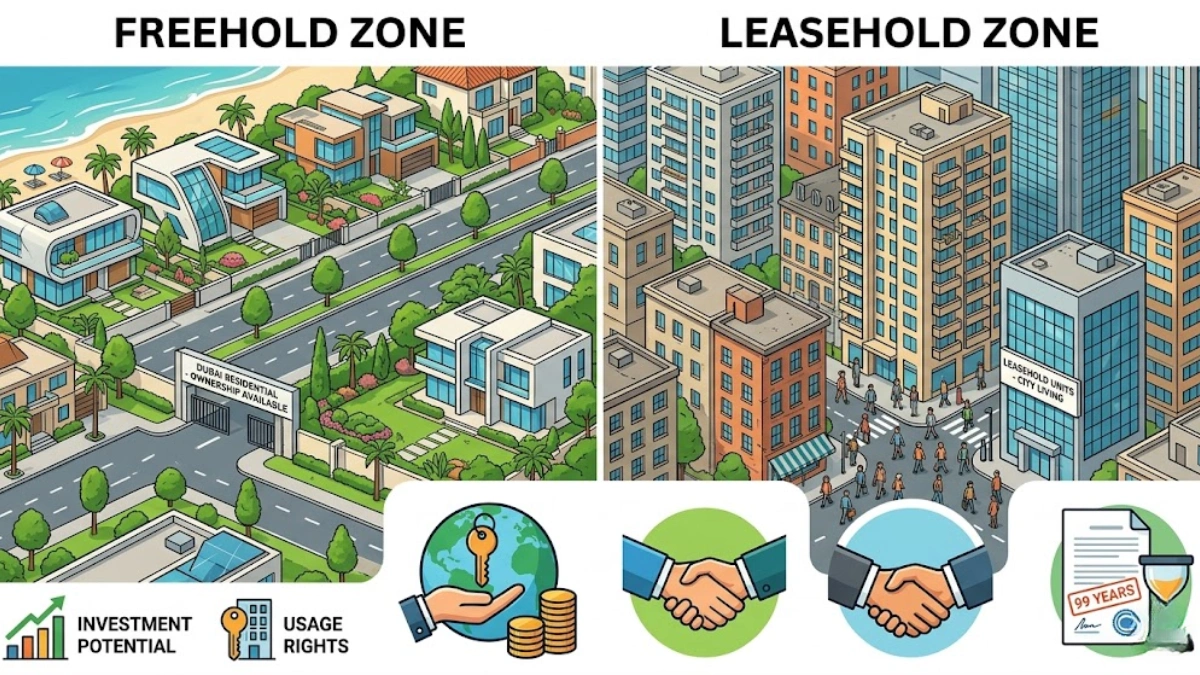
A freehold property gives the buyer complete ownership of the property and the land on which it is built. This means the owner has permanent rights over the asset and can sell, rent, transfer, or inherit the property without restrictions, subject to Dubai laws.
Foreign nationals are allowed to buy freehold properties in designated areas approved by the government of Dubai. Since the introduction of the freehold law in 2002, Dubai’s real estate market has seen rapid international growth.
Advantages of Freehold Property
- Full ownership rights
- Permanent ownership with no expiry date
- Freedom to sell or lease the property
- Higher resale value
- Better long-term investment potential
- Eligibility for residency visas in some cases
- Easier inheritance transfer to family members
Freehold properties are highly preferred by overseas investors because they provide complete control and stronger long-term financial benefits.
Popular Freehold Areas in Dubai
Some of the most famous freehold zones in Dubai include:
- Downtown Dubai
- Dubai Marina
- Palm Jumeirah
- Business Bay
- Jumeirah Village Circle
- Dubai Hills Estate
These communities are known for strong rental demand, modern infrastructure, luxury amenities, and high capital appreciation potential.
What Is Leasehold Property in Dubai?
A leasehold property allows a buyer to lease a property for a fixed period, usually between 30 and 99 years. In this arrangement, the land ownership remains with the original freeholder or landlord.
Once the lease period ends, ownership rights may return to the landowner unless the lease agreement is renewed.
Advantages of Leasehold Property
- Lower purchase prices
- Good option for short-term residence
- Suitable for buyers with limited budgets
- Access to established communities
Leasehold properties can still be attractive in prime locations where freehold ownership may not be available or affordable.
Popular Leasehold Areas in Dubai
Some areas in Dubai historically offering leasehold options include:
- Deira
- Bur Dubai
- Al Barsha
- Jumeirah
These neighborhoods are popular among long-term residents due to their central locations and established infrastructure.
Main Differences Between Freehold and Leasehold
Understanding the differences between these ownership structures is crucial before making an investment decision.
| Feature | Freehold | Leasehold |
|---|---|---|
| Ownership Duration | Permanent | Limited term |
| Land Ownership | Yes | No |
| Inheritance Rights | Full | Restricted |
| Renovation Rights | More flexible | Often requires permission |
| Resale Value | Usually higher | May decline over time |
| Investment Potential | Strong | Moderate |
| Foreign Ownership | Allowed in designated zones | Available in selected areas |
Which Is Better for Foreign Investors?
For most international buyers, freehold property is considered the better option because it offers permanent ownership and greater investment security.
Reasons Investors Prefer Freehold
1. Better Long-Term Returns
Freehold properties in premium areas of Dubai often experience stronger capital appreciation compared to leasehold properties.
2. Strong Rental Income
Areas such as Dubai Marina and Downtown Dubai attract tourists, professionals, and expatriates, creating high rental demand.
3. Greater Ownership Freedom
Owners can renovate, rent, or sell the property without major restrictions.
4. Residency Visa Opportunities
Certain property investments may qualify buyers for long-term UAE residency visas depending on property value and government regulations.
Risks Buyers Should Consider
Before purchasing any property in Dubai, buyers should carefully evaluate:
- Developer reputation
- Service and maintenance fees
- Mortgage eligibility
- Legal ownership documents
- Property registration
- Lease renewal conditions
- Market conditions and rental demand
Working with licensed real estate brokers and legal advisors is highly recommended for foreign investors.
Additional Costs of Buying Property in Dubai
Besides the property price, buyers should budget for additional expenses such as:
- Registration fees
- Real estate agency commissions
- Mortgage processing fees
- Maintenance charges
- Insurance costs
Luxury freehold communities often have higher annual service charges because of premium facilities and amenities.
Dubai Real Estate Market Outlook
Dubai’s property market continues attracting investors because of several major advantages:
- No annual property tax
- High rental yields
- Growing tourism industry
- Investor-friendly government policies
- Modern infrastructure
- Strong international demand
Freehold zones remain especially attractive because they provide full ownership rights combined with long-term investment potential.
FAQs About Freehold and Leasehold Property in Dubai
Can foreigners buy freehold property in Dubai?
Yes. Foreign nationals can purchase freehold properties in designated areas approved by the Dubai government.
Is freehold better than leasehold in Dubai?
For long-term investment purposes, freehold is generally considered better because it offers permanent ownership and stronger resale value.
How long does leasehold ownership last?
Leasehold ownership usually lasts between 30 and 99 years, depending on the agreement.
Can leasehold properties be inherited?
Inheritance rights for leasehold properties may be limited and depend on the lease agreement terms.
Do freehold property owners own the land?
Yes. Freehold owners have ownership rights over both the property and the land.
Are leasehold properties cheaper than freehold?
In many cases, yes. Leasehold properties often have lower upfront costs compared to freehold properties in similar locations.
Can freehold property owners get a UAE residency visa?
Certain property investments may qualify owners for residency visas depending on government requirements and minimum investment values.
Which areas in Dubai are best for freehold investment?
Popular freehold investment areas include Downtown Dubai, Dubai Marina, and Palm Jumeirah.
Final Thoughts
Understanding the difference between freehold and leasehold property is essential before investing in Dubai real estate. Freehold ownership offers permanent rights, better investment security, stronger resale value, and greater legal control. Leasehold properties may offer lower entry costs but come with time limitations and ownership restrictions.
For most international investors, freehold zones in Dubai remain the preferred choice due to their long-term benefits and stronger market demand. Before purchasing any property, buyers should conduct detailed research, verify legal documents, and consult licensed professionals to make a secure and profitable investment decision.